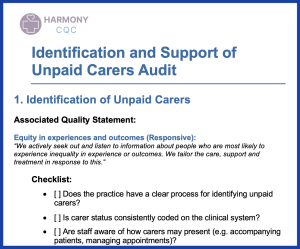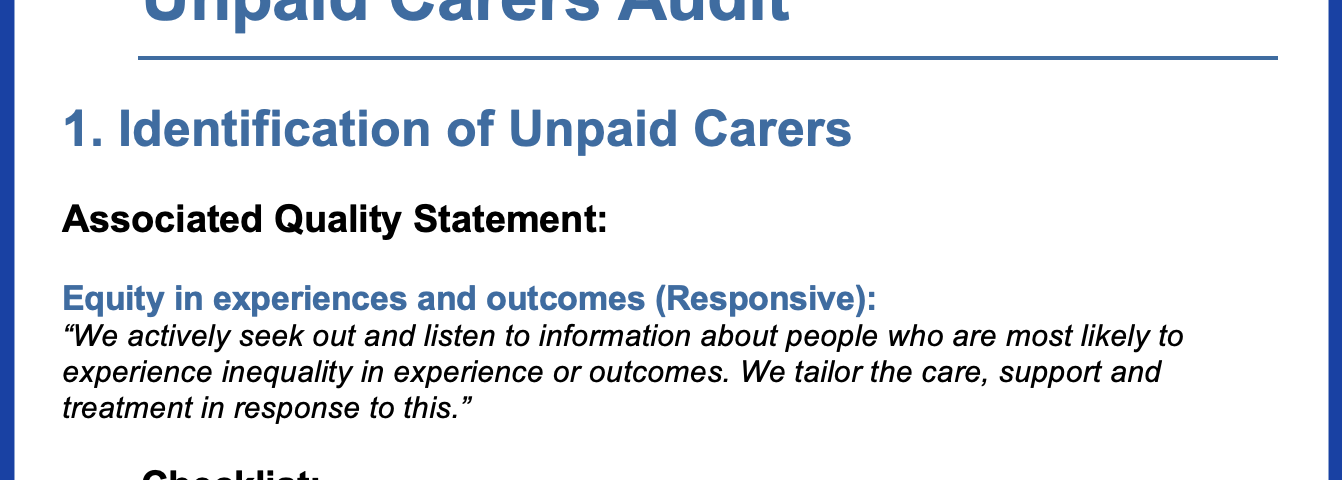
Audit download: Identification and Support of Unpaid Carers Audit
Unpaid carers are a vital but often invisible part of the health and care system. Many support partners, parents, children, or friends with long-term conditions, disability, mental illness, or frailty – often alongside work, parenting, and their own health needs.
In general practice, carers may attend frequently on behalf of others, manage appointments and medications, or prioritise someone else’s health over their own. When carers are not identified or supported, their own wellbeing is at risk, and so is the sustainability of the care they provide.
Why This Audit Was Created
This audit focuses on Identification and Support of Unpaid Carers, aligning with the following CQC “We” statements:
- Treating people as individuals (Caring)
- Providing information (Responsive)
- Equity in experiences and outcomes (Responsive)
CQC increasingly expects practices to show how they proactively identify carers, make them visible within systems, and adapt care to recognise their unique needs and risks.
Why This Matters in General Practice
Carers are at higher risk of poor health
Unpaid carers are more likely to experience stress, exhaustion, mental health difficulties, and long-term physical conditions. If carers are not recognised, they may miss health checks, screenings, or timely support for themselves.
Identification is the gateway to support
Practices cannot support carers they cannot see. Accurate coding and visibility of carer status allow teams to offer reasonable adjustments, targeted information, and timely interventions — improving both access and outcomes.
Equity, not uniformity
Treating carers equitably often means doing things differently — flexible appointments, proactive reviews, or alternative communication methods. CQC expects services to tailor care, not simply offer the same approach to everyone.
Strong governance and population awareness
Carer identification is also a marker of how well a practice understands its population. Reviewing carer data through governance processes shows that support for carers is embedded, not incidental.
What Good Practice Looks Like
- Clear systems for identifying and coding unpaid carers
- Carer status visible and meaningful in patient records
- Proactive signposting to local and national support services
- Reasonable adjustments to support access and continuity
- Regular review of carer support through governance meetings
Final Thoughts
Supporting unpaid carers is not an optional extra, it is a core part of delivering compassionate, person-centred care. When carers are recognised and supported, they are better able to look after themselves and the people they care for.
By completing the Identification and Support of Unpaid Carers Audit, practices can demonstrate that they:
- Understand and respond to hidden inequalities
- Value carers as individuals with their own health needs
- Meet CQC expectations with confidence and clarity
Most importantly, it shows a commitment to seeing the whole person – not just the condition or the caring role.
Click the link below to join our Inner Circle today for just £1 for your first month and unlock full access to every CQC audit — your essential toolkit to feel fully prepared and inspection ready! 👇