At Enhanced Primary Care, we love a win-win scenario, and this is a great example of one.
Practices deserve confidence that when they submit prescriptions correctly, they will be paid accurately. At the same time, it’s important to identify where processes might be unintentionally causing practices to miss out on income.
That’s where Enhanced Technology comes in.
Through their Prescription Processing Audit (PPA) work, Enhanced Technology supports practices in identifying historic claims that may have been missed and ensuring they receive the income they are entitled to.
Over the past year alone, Enhanced Technology has processed 390 historic PPA claims on behalf of practices, uncovering over £2 million in missed income.
What’s particularly interesting from this work is what the data tells us about where the problem actually occurs.
And perhaps more importantly – where it doesn’t.
NHSBSA Processing Is Highly Reliable
When missed income is discovered, it’s easy to assume the issue might sit with the NHS Business Services Authority (NHSBSA) and the scanning or processing of prescriptions.
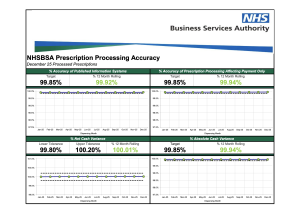
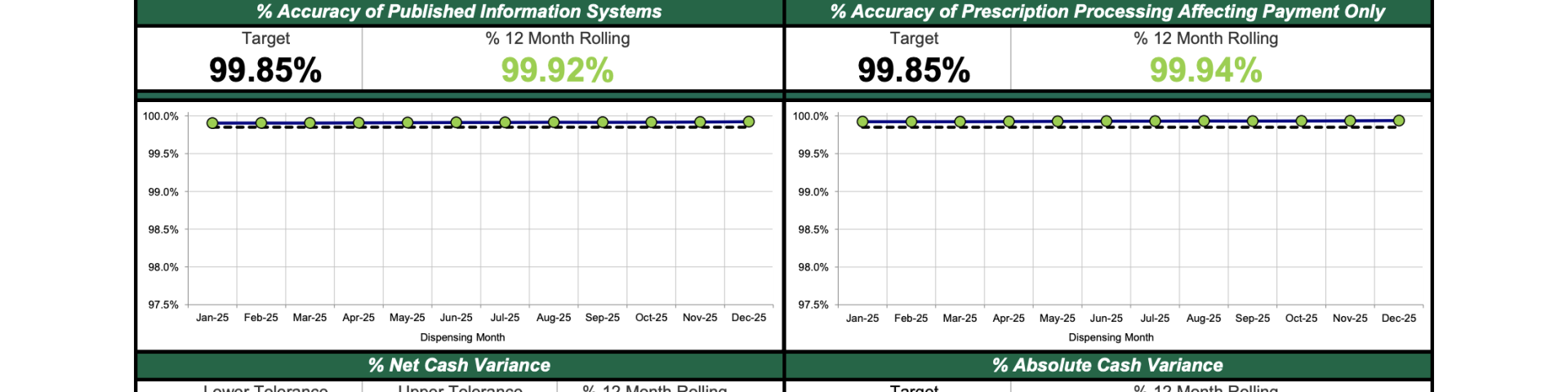
However, the published performance data shows that the NHSBSA system is extremely accurate and reliable.
Across several key measures, accuracy consistently sits above 99.9% on a 12-month rolling basis.
Key metrics include:
- Accuracy of Published Information Systems: 99.92%
- Accuracy of Prescription Processing Affecting Payment: 99.94%
- Absolute Cash Variance Accuracy: 99.94%
- Net Cash Variance: 100.01%
These figures demonstrate that once prescriptions are received by NHSBSA, they are processed with exceptionally high accuracy.
More information about the NHSBSA prescription processing system can be found here:
The takeaway is reassuring:
If the prescription reaches NHSBSA, practices almost always get paid.
Where the Real Problem Happens
Through analysing hundreds of historic claims, Enhanced Technology has found that the issue usually occurs before the prescription ever reaches NHSBSA.
In many cases, the prescription was simply never printed.
This often happens when medications are administered directly from stock within the practice.
The process typically looks like this:
- A clinician takes a medication from the cupboard
- The drug is administered to the patient
- The administration is correctly recorded in the patient record
But the FP10 prescription that should support the claim is never printed.
Without that prescription being printed and submitted, there is nothing for NHSBSA to process or reimburse.
Why This Happens More Often Today
There are several reasons why this step is easier to miss than it used to be.
The Growth of EPS
With the Electronic Prescription Service (EPS), far fewer prescriptions are printed in practices today.
Printing prescriptions is no longer part of daily routine for many clinicians, which means the habit or “muscle memory” of printing can be lost.
Secure Prescription Stationery
CQC requirements around secure prescription stationery have also changed workflows.
Many practices now operate with:
- Locked prescription printers
- Restricted access to stationery
- Centralised printing locations
While these controls are important for security, they can make the process of printing prescriptions less immediate and therefore easier to forget.
Clinical Workload
Practice teams are doing an extraordinary job delivering care under significant pressure.
When a medication is administered, the clinical priority is always the patient in front of them.
Unfortunately, the administrative step of printing the prescription can easily be missed afterwards.
A Simple but Important Reminder
The encouraging message from this work is that the national processing system is not the issue.
NHSBSA’s own performance data shows the system is extremely accurate and reliable.
Which means:
If the prescription is printed and sent, the practice will almost certainly get paid for it.
By tightening the link between recording the administration of a drug and printing the prescription, practices can significantly reduce the risk of missing claims.
Could Your Practice Be Missing Claims?
Across the practices supported by Enhanced Technology, missed prescription claims can sometimes amount to tens of thousands of pounds per year.
Enhanced Technology’s Prescription Processing Audit helps practices identify these historic gaps and recover income that should have been claimed.
Last year alone, this work helped recover over £2 million for GP practices.
If your practice thinks it may be missing claims for drugs administered from stock, the next step is simple.
Head over to gppr.uk where you can:
- Watch the short video explaining how the process works
- Book a call with the team
- Or sign up directly through the website
It’s a simple way to move from uncertainty to certainty – either confirming your practice is already claiming everything it should, or identifying the gaps and unlocking a welcome cash injection that can fund the quality improvement work needed to close them. And because the service is entirely commission-based, if we don’t find anything, you don’t pay a penny.