https://club.hcqc.co.uk/c/self-audits/edit-lesson/sections/517638/lessons/2343767
General practice is a frontline environment — one where healthcare professionals, administrators, and support staff are regularly exposed to infectious risks and vulnerable patient groups. Ensuring staff are protected through appropriate immunisations is more than a clinical best practice — it’s a regulatory expectation and a cornerstone of a safe working environment.
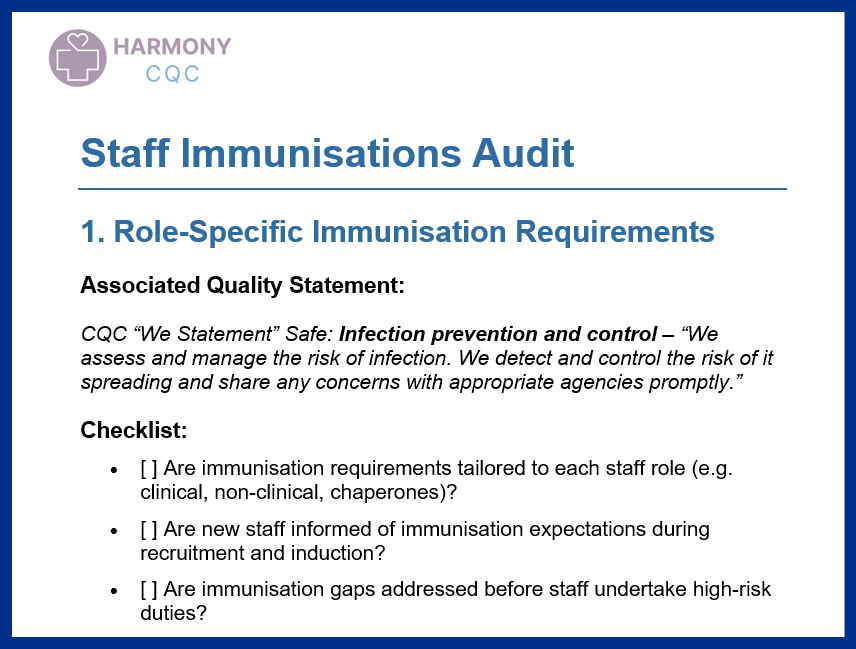
This week’s audit focuses on staff immunisations, offering a structured way to check that your processes are up to date, risk-assessed, and aligned with national standards and Care Quality Commission (CQC) requirements.
Why Immunisation Matters in Primary Care
General practice professionals — from clinicians to reception staff — can be exposed to a range of infectious agents such as hepatitis B, measles, mumps, rubella, varicella (chickenpox), influenza, and tuberculosis. Immunisation reduces:
- The risk of occupational exposure and transmission to colleagues and patients
- Outbreaks within healthcare settings, which can disrupt care and endanger vulnerable individuals
- Staff sickness absence, promoting continuity of service and reducing pressure on remaining staff
These benefits are particularly important in primary care, where the patient population includes the immunosuppressed, elderly, pregnant women, and young children.
A Cornerstone of Infection Prevention and Control
The CQC recognises the value of staff immunisation through the ‘We’ statement on Infection Prevention and Control:
“We assess and manage the risk of infection. We detect and control the risk of it spreading and share any concerns with appropriate agencies promptly.”
An up-to-date and role-specific approach to immunisation is a vital part of your infection control strategy. It helps prevent the introduction and spread of infections within the practice and protects your community as a whole.
Building Trust Through Good Governance
Effective immunisation management also reflects strong governance and risk management processes. The ‘Governance, management and sustainability’ statement under the CQC’s Well-led key question highlights this:
“We have clear responsibilities, roles, systems of accountability and good governance…”
CQC inspectors will expect to see evidence that your practice:
- Understands which staff roles require what level of immunisation
- Holds accurate, confidential records of immunisation status
- Has a clear policy that is implemented and regularly reviewed
- Manages exceptions through appropriate risk assessment
Failure to demonstrate these measures may not only impact your compliance but could raise concerns over workplace and patient safety.
Staff Safety Is Just as Important as Patient Safety
Immunisation is a professional and ethical duty. It signals that a practice values the wellbeing of its staff and takes active steps to protect them from harm. The ‘Safe and effective staffing’ statement reinforces this principle:
“We make sure there are enough qualified, skilled and experienced people, who receive effective support, supervision and development…”
When staff feel that their health and safety are prioritised — including access to vaccines, time to attend appointments, and open dialogue around immunisation — they are more likely to feel valued, stay healthy, and contribute fully to patient care.
What This Audit Helps You Achieve
This week’s audit is designed to help practices:
- Clarify what immunisations are required for each role
- Ensure records are up-to-date and accessible for review
- Support staff to access vaccinations easily
- Manage non-compliance or exceptions safely and consistently
- Meet the expectations of regulators, staff, and the public
In Summary
Staff immunisation isn’t just an administrative task — it’s a cornerstone of safe, high-quality, patient-centred care. It protects patients, safeguards staff, and strengthens your practice’s ability to operate efficiently and compliantly.
By completing this audit, you’re not only preparing for inspection — you’re actively investing in a safer, stronger practice for everyone.