https://club.hcqc.co.uk/c/self-audits/edit-lesson/sections/517638/lessons/2331205
In a busy general practice setting, staff work closely with people of all ages and backgrounds — often those who are vulnerable, isolated, or in need of intimate care. Ensuring that everyone employed or volunteering in your practice is safe and appropriate to be in those roles is not just good governance — it’s a fundamental safeguarding duty.
This is where Disclosure and Barring Service (DBS) checks play a central role.
What the CQC Expects
Under the CQC Single Assessment Framework, DBS checks align with two key quality statements:
- Safeguarding (Safe key question)
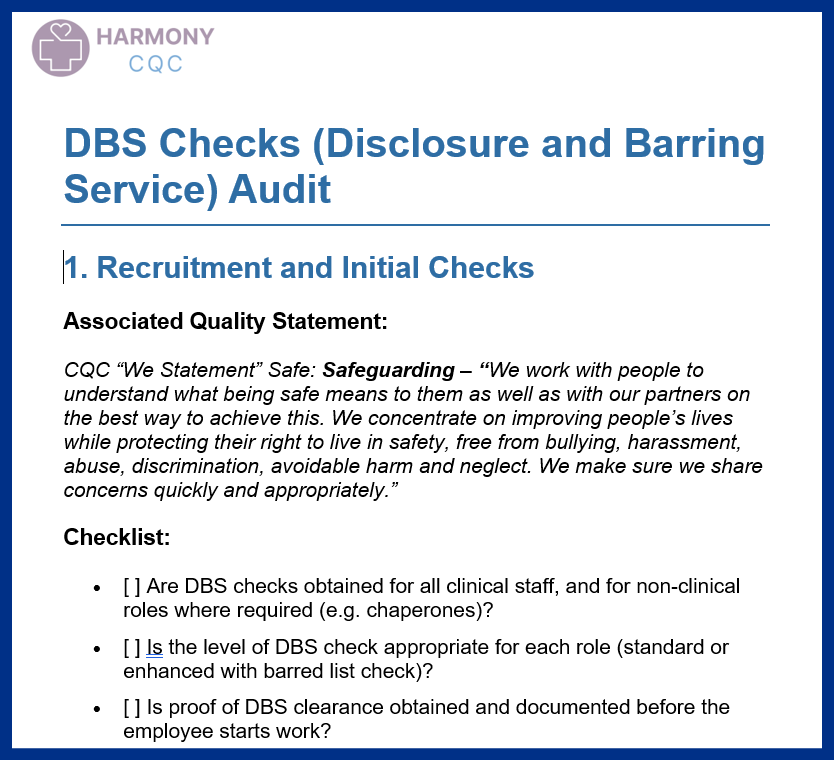
“We work with people to understand what being safe means to them as well as with our partners on the best way to achieve this. We concentrate on improving people’s lives while protecting their right to live in safety, free from bullying, harassment, abuse, discrimination, avoidable harm and neglect. We make sure we share concerns quickly and appropriately.”
- Governance, management and sustainability (Well-led key question)
“We have clear responsibilities, roles, systems of accountability and good governance. We use these to manage and deliver good quality, sustainable care, treatment and support. We act on the best information about risk, performance and outcomes, and we share this securely with others when appropriate.”
CQC inspectors expect practices to have:
- Clear policies outlining DBS expectations
- Evidence that DBS checks are completed for relevant staff
- A system for rechecking or reviewing when roles or risks change
- A process for handling positive disclosures or risk-based exceptions
Why It’s About More Than a Paper Certificate
A DBS check is a snapshot — it’s one piece of evidence in your safer recruitment process. Used correctly, it helps to:
- Prevent unsuitable individuals from accessing vulnerable groups
- Support safe decision-making during recruitment
- Promote a safeguarding culture, where all staff understand their responsibilities
- Reinforce public confidence in the professionalism and safety of the practice
Common Weak Spots in DBS Compliance
Even in well-run practices, audits often reveal gaps such as:
- Unclear guidance on which roles require checks
- No process for renewing or rechecking after several years
- Delays in checking new starters before they begin work
- No risk assessment in place for interim arrangements
This audit is designed to help you identify and close those gaps, building a stronger safety net around your patients, team, and service reputation.
What the Audit Helps You Explore
The audit supports you to:
- Confirm that all relevant roles have appropriate DBS clearance
- Ensure that checks are completed before work begins
- Monitor DBS renewal dates or flags
- Maintain clear, secure records
- Apply risk assessments where checks are delayed or not required
In Summary
DBS checks are a critical line of defence in protecting patients, maintaining public trust, and ensuring regulatory compliance.
By completing this audit, your practice will:
- Strengthen its recruitment and safeguarding procedures
- Demonstrate good governance to CQC inspectors
- Reduce risk and promote confidence across your team and community
👉 Safe recruitment starts with clear, consistent DBS controls — and this audit helps ensure you’ve got them in place.