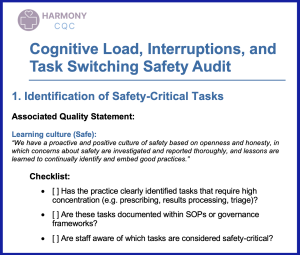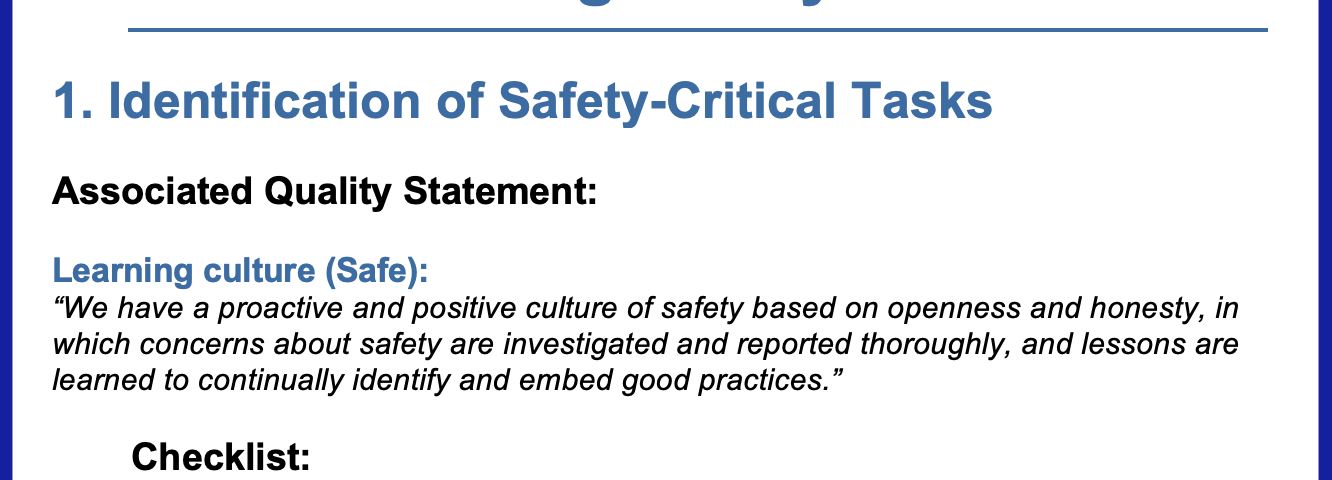
Download the Audit here: Cognitive Load, Interruptions, and Task Switching Safety Audit
General practice is a high-pressure environment. Clinicians and staff are constantly balancing competing demands: consultations, prescriptions, results, triage, phone calls, and urgent interruptions. While this is often accepted as “just part of the job”, it carries a very real patient safety risk.
Errors in healthcare rarely occur because someone doesn’t care or isn’t competent. More often, they happen because systems allow too much pressure, too many interruptions, and unsafe task switching.
Why This Audit Was Created
This week’s audit focuses on Cognitive Load, Interruptions, and Task Switching Safety, aligning with the following CQC “We” statements:
- Learning culture (Safe)
- Safe and effective staffing (Safe)
- Workforce wellbeing and enablement (Caring)
The purpose is to help practices step back and ask an important question:
”Are our systems designed to support safe working — especially when pressure is high?”
Why This Matters in General Practice
1. Patient safety depends on system design
Tasks such as prescribing, results handling, and triage require sustained concentration. Frequent interruptions during these activities significantly increase the risk of mistakes. CQC increasingly expects practices to show how they design work safely, not just react when things go wrong.
2. Pressure and interruptions are a human factors issue
Modern inspections recognise that fatigue, multitasking, and cognitive overload are predictable risk factors, not individual failings. Practices that actively manage these risks demonstrate mature, safety-focused governance.
3. Staff wellbeing and retention
Constant task switching and unmanaged pressure contribute to stress, burnout, and reduced morale. Supporting staff to work safely under pressure protects wellbeing and helps retain experienced team members.
4. Learning from near misses
Near misses are often early warning signs of unsafe systems. Practices that review incidents through a human factors lens — asking “What made this easy to get wrong?” — are far better positioned to prevent future harm.
What Good Practice Looks Like
- Safety-critical tasks are clearly identified and protected
- Interruptions are managed through agreed team rules
- Workload and capacity are reviewed with safety in mind
- Staff feel safe raising concerns about pressure or risk
- Learning leads to system changes, not blame
Final Thoughts
This audit is not about asking staff to “cope better”. It is about ensuring that systems support people to work safely, even on the busiest days.
By completing the Cognitive Load, Interruptions, and Task Switching Safety Audit, practices can demonstrate that they:
- Understand human factors and safety science
- Actively reduce avoidable risk
- Support staff wellbeing
- Learn and improve continuously
This is exactly the kind of thinking CQC expects to see in Safe and Well-led services and it provides strong, credible evidence during inspection.
Click the link below to join our Inner Circle today for just £1 for your first month and unlock full access to every CQC audit — your essential toolkit to feel fully prepared and inspection ready! 👇