https://club.hcqc.co.uk/c/self-audits/edit-lesson/sections/517638/lessons/2088134
The move to digital healthcare has transformed how general practice operates — offering faster access, more efficient communication, and greater flexibility for many patients.
But as services shift online, it’s vital to ensure that no one is left behind.
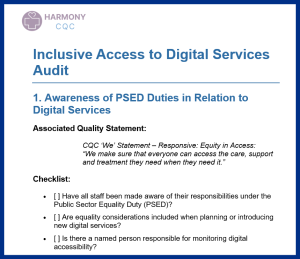
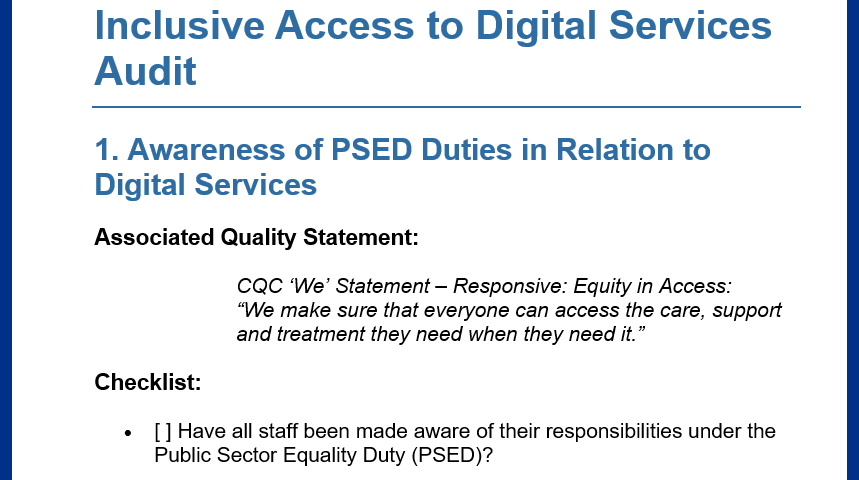
This week’s audit focuses on inclusive access to digital GP services, helping you assess how well your practice supports all patients — including those who may be at risk of digital exclusion.
Understanding the Public Sector Equality Duty (PSED)
The Public Sector Equality Duty (PSED) is part of the Equality Act 2010, and it applies to all public bodies — including general practices. It requires practices to actively consider how their decisions, services, and policies affect people who have protected characteristics (such as age, disability, race, sex, religion or belief, etc.). This duty means that practices must remove or reduce disadvantages, take steps to meet different needs, and encourage participation where it is low or lacking.
Because general practices are public bodies, this duty applies in full. And importantly, the Care Quality Commission (CQC) has made it clear that PSED compliance will be assessed as part of the new Single Assessment Framework, particularly through the quality statements on equity in access and equity in experiences and outcomes. Ensuring digital services are inclusive is a key part of meeting that duty.
Why This Audit Matters
1. It’s a Legal Duty
Under the PSED, practices must take proactive steps to identify and remove barriers that could prevent people from accessing care. This includes making sure digital tools and services do not unintentionally exclude patients due to disability, age, literacy, or language.
2. It Aligns with the CQC’s Framework
The Care Quality Commission (CQC) now inspects practices using quality statements. Two key ones underpin this audit:
- Equity in Access – making sure care is available and accessible to all
- Equity in Experiences and Outcomes – ensuring people are treated fairly and receive the care they need in a way that works for them
This audit helps you gather practical, inspectable evidence that your digital services are inclusive and aligned with CQC expectations.
What Are the Risks of Digital Exclusion?
While online booking, video consultations and patient messaging apps are increasingly the norm, they can pose barriers for certain groups, including:
- Older patients who may lack confidence with technology
- People with learning disabilities or autism
- Patients with visual impairments or hearing loss
- People whose first language is not English
- Individuals without internet access or smartphones
Without adjustments, these patients may face delays, frustration, or even avoid care altogether.
What the Audit Helps You Explore
This audit gives you a structured way to reflect on key areas:
- Are patients given choice between digital and non-digital access routes?
- Do you monitor and support groups who may be excluded from digital options?
- Are staff aware of their responsibilities under the PSED when rolling out or using digital tools?
- How well are you listening to and acting on feedback about digital experiences?
A Small Step That Can Make a Big Difference
Digital access is no longer a “nice to have” — it’s a core part of primary care delivery. But unless designed with inclusion in mind, digital services can widen health inequalities.
By completing this audit, you’ll be able to:
- Identify areas for improvement
- Make small, meaningful changes
- Demonstrate that equity is at the heart of your service design
In Summary
Digital transformation in general practice offers huge benefits — but only if everyone can access it. This audit ensures your approach is:
- ✅ Inclusive
- ✅ Legally compliant
- ✅ Aligned with CQC expectations
- ✅ Grounded in patient needs
👉 Use the audit today to check how your digital services support every patient — not just the digitally confident ones.