https://club.hcqc.co.uk/c/self-audits/edit-lesson/sections/517637/lessons/1942645
General practices are responsible for providing a safe and secure environment for patients, staff, and visitors. While clinical care is the primary focus, physical security risks – such as unauthorised access, inadequate surveillance, poor perimeter security, and ineffective emergency response measures, can pose serious threats to operations and safety.
A Physical Security & Building Safety Audit helps general practices assess potential risks, identify weaknesses, and implement improvements to enhance security. By regularly reviewing access control, surveillance, panic alarm systems, and perimeter safety, practices can ensure they are proactively protecting people, assets, and sensitive medical information.
Key Reasons to Conduct a Physical Security Audit in General Practice
1. Preventing Unauthorised Access to the Practice
Medical practices must carefully manage who enters and exits the building, ensuring only authorised staff, patients, and visitors gain access. Without strict access control, patient data, medication storage, and medical equipment could be at risk.
🔹 Key questions to consider:
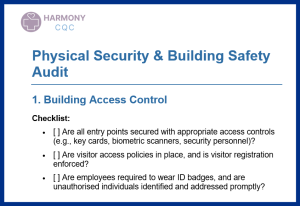
- Are access points, such as doors and restricted areas, properly secured with key cards, biometric access, or security personnel?
- Do all staff members and visitors follow the correct entry procedures? Are visitor logs maintained?
- Are ID badges worn and checked to prevent unauthorised individuals from gaining entry?
By assessing building access control, practices can strengthen security procedures and prevent unauthorised individuals from entering restricted areas.
2. Enhancing Surveillance & Monitoring
Security cameras and proper surveillance play a crucial role in preventing security incidents, theft, and unauthorised access. Without adequate monitoring, a practice could be vulnerable to suspicious activity, vandalism, or even staff or patient disputes that require evidence.
🔹 Key questions to consider:
- Are CCTV cameras positioned correctly to monitor key areas such as entrances, exits, hallways, and waiting rooms?
- How effectively is surveillance footage reviewed? Is there a process for responding to suspicious activity?
- Are there blind spots or unmonitored areas that could pose a security risk?
Ensuring that CCTV systems are properly maintained and footage is securely stored can help deter crime, protect assets, and provide critical evidence if needed.
3. Strengthening Panic Alarm Systems & On-Site Security
Healthcare settings can sometimes involve high-risk situations, such as aggressive patients, intruders, or medical emergencies where security intervention is required. A panic alarm system allows staff to quickly summon help in critical situations.
🔹 Key questions to consider:
- Are panic alarms installed in essential areas, such as reception, consultation rooms, and staff-only zones?
- Do staff feel confident in using the panic alarm system? Have they received adequate training?
- How quickly does the panic alarm trigger a response from security personnel or emergency services?
- Have there been past incidents where a panic alarm was required? How well was the situation handled?
By ensuring panic alarms are well-placed, regularly tested, and properly used, general practices can protect staff and patients from potential security threats.
4. Securing the Perimeter & Parking Areas
A practice’s external security is just as important as its internal security. Poor lighting, unsecured fencing, or inadequate patrols can put staff and visitors at risk, especially during early morning or late evening hours.
🔹 Key questions to consider:
- How easy would it be for an unauthorised person to access the premises from the outside? Are external doors, gates, and fences well-maintained?
- Are car parks, entrances, and outdoor areas well-lit to deter criminal activity?
- How well does the current security system prevent theft, vandalism, or loitering?
- If an emergency occurred outside the practice, such as an assault or a theft, how quickly could assistance be provided?
By reviewing perimeter security, parking safety, and outdoor surveillance, practices can create a safer environment for staff and visitors while preventing unauthorised access.
The Role of the Physical Security & Building Safety Audit
A Physical Security & Building Safety Audit provides a structured approach to evaluating security risks and implementing safety improvements. This ensures that:
✔ Patients, staff, and visitors feel safe and protected at all times.
✔ The practice is secure from unauthorised access and potential threats.
✔ Panic alarms, CCTV, and on-site security measures are effective and regularly reviewed.
✔ External perimeter security is strong, preventing security incidents outside the building.
Final Thoughts
A Physical Security & Building Safety Audit is essential for ensuring that general practice premises remain safe, secure, and well-monitored. From preventing unauthorised access to ensuring perimeter and car park security, a proactive approach to physical security can prevent incidents before they occur.