
https://club.hcqc.co.uk/c/self-audits/edit-lesson/sections/426166/lessons/1596172
Delivering high-quality patient care in general practice isn’t just about having the right policies and procedures in place, it’s about ensuring you have the right people, with the right skills, at the right time.
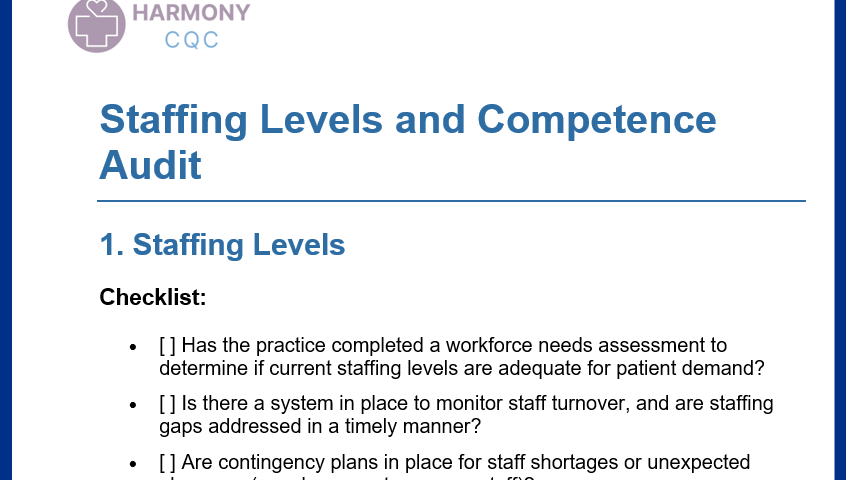
Effective workforce planning ensures that staffing levels are safe, skills are appropriate, and competence is regularly reviewed. The Staff Levels and Competence Audit is designed to help general practices assess their workforce capacity, ensuring they meet regulatory requirements while delivering consistent, high-quality patient care.
Why Auditing Staff Levels and Competence is Essential
1. Patient Safety and Quality of Care
The number of staff and their level of competence directly impact patient outcomes, safety, and overall service quality.
Understaffing risks:
- Increased patient wait times.
- Higher risk of errors and missed diagnoses.
- Staff burnout leading to fatigue-related mistakes.
Lack of skills or competence risks:
- Procedures being carried out incorrectly or inefficiently.
- Clinical risks due to insufficient training or supervision.
- Poor patient experience and complaints due to lack of professional development.
By regularly auditing staff levels and competence, practices can identify gaps and take proactive steps to ensure patient safety remains a top priority.
2. Regulatory Compliance and CQC Expectations
The Care Quality Commission (CQC) places significant emphasis on staff competence and safe staffing levels under the safe and well-led domains.
CQC inspectors expect to see:
✅ Sufficient staffing levels to meet patient demand.
✅ Regular competency assessments and training records.
✅ Clear role definitions and delegation of responsibilities.
✅ Evidence of staff supervision, induction, and development opportunities.
A failure to demonstrate safe staffing levels and competence could result in:
❌ CQC enforcement actions (e.g., warnings, special measures).
❌ Negative patient experiences due to overstretched or undertrained staff.
❌ Increased legal and reputational risks for the practice.
The Staff Levels and Competence Audit helps practices ensure compliance and provides the necessary evidence for inspections.
3. Staff Morale, Retention, and Wellbeing
A well-managed, competent team is a happy team. High staff turnover, burnout and dissatisfaction often stem from poor workforce planning and a lack of training opportunities.
The impact of understaffing on team morale:
- Staff feeling overwhelmed and unsupported.
- Increased sickness absence and stress-related leave.
- Higher staff turnover, creating further instability.
The impact of poor competence management:
- Lack of career progression leading to frustration and disengagement.
- Staff feeling undervalued if training is neglected.
- Increased complaints or disciplinary issues.
By regularly assessing staffing levels and competency, practices can:
✅ Ensure workload is distributed fairly.
✅ Support staff development, boosting engagement and retention.
✅ Create a strong, resilient workforce capable of adapting to challenges.
Practical Steps to Improve Staff Levels and Competence
- Use a Skills Matrix
A skills matrix is a tool to track staff competencies, training needs, and areas for development. This ensures that gaps are addressed before they impact patient care.
- Implement a Workforce Plan
Review staffing requirements annually based on patient numbers and demand.
Ensure recruitment aligns with clinical priorities (e.g., additional healthcare assistants or ANPs to manage workload).
- Schedule Regular Training & Development
Develop a training calendar for mandatory updates.
Encourage role-specific upskilling (e.g., prescribing qualifications for nurses, leadership training for managers).
- Monitor and Adjust in Real-Time
Use patient feedback and staff appraisals to adjust workloads.
Ensure clear delegation to reduce inefficiencies.
Final Thoughts: Investing in Your Team is Investing in Your Practice
Workforce planning, training and development are not just compliance exercises, they are essential for running a safe, high-quality general practice.
By completing the Staff Levels and Competence Audit, your practice can:
✅ Ensure optimal staffing levels to meet patient needs.
✅ Identify skills gaps and plan training accordingly.
✅ Improve compliance and demonstrate strong leadership.
✅ Enhance staff morale and retention, reducing turnover risks.
Next Step: Complete the Staff Levels and Competence Audit today and take proactive steps to build a strong, competent, and well-supported workforce.
