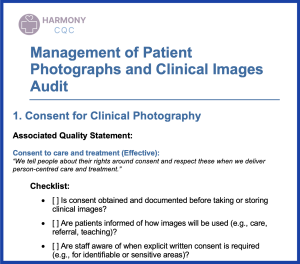
Audit: Management of Patient Photographs and Clinical Images Audit
The use of clinical photographs in general practice has grown rapidly, from wound care documentation to remote consultations and patient-submitted images via online platforms.
While these photos are invaluable for diagnosis, monitoring, and continuity of care, they also carry significant responsibilities around consent, privacy, and data security.
This week’s audit focuses on ensuring that all photographs and clinical images are managed safely, respectfully, and in line with data protection legislation.
🔍 Why This Audit Was Created
This audit helps practices review how effectively they:
- Obtain and record informed patient consent before taking or using images.
- Store images securely and link them correctly to patient records.
- Share images safely and only through approved, encrypted systems.
- Manage image retention and deletion in line with the NHS Records Management Code of Practice.
It aligns with:
- Regulation 9: Person-centred care
- Regulation 10: Dignity and respect
- Regulation 11: Need for consent
- Regulation 12: Safe care and treatment
- Regulation 17: Good governance
and supports the following CQC “We” statements:
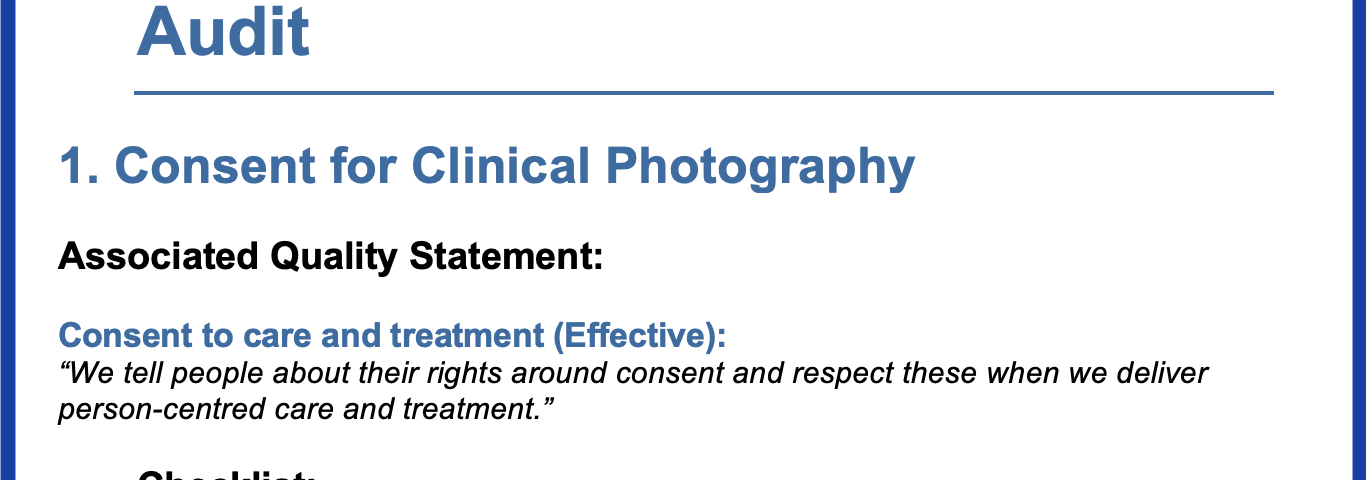
- Consent to care and treatment (Effective)
- Kindness, compassion and dignity (Caring)
- Safe environments (Safe)
- Governance, management and sustainability (Well-led)
💬 Why This Matters in General Practice
Clinical images form part of the patient’s health record and must be treated with the same level of care and security as any other confidential data.
With the increasing use of mobile devices, remote consultation platforms, and patient-submitted photos, the risk of accidental breaches or unclear consent has also grown.
Good governance around image management:
- Protects patient privacy and dignity, especially for sensitive or identifiable images.
- Ensures legal compliance with GDPR, the Data Protection Act, and NHS policies.
- Strengthens patient trust in digital and remote consultation processes.
- Demonstrates accountability and leadership oversight in information governance — a key CQC focus area.
What Good Practice Looks Like
- Consent first: Patients understand why a photo is being taken, how it will be used, and who will see it.
- Secure storage: Images are uploaded directly into the patient’s record and removed from any local device immediately.
- Approved systems only: Photos are shared using encrypted, NHS-approved channels such as NHS Mail or system-integrated functions.
- Clear policies: Retention and deletion processes are clearly defined and reviewed regularly.
✅ Final Thoughts
The move toward digital and remote care has made clinical photography more useful, but also more high-risk if not governed properly.
By completing the Management of Patient Photographs and Clinical Images Audit, practices can ensure they are protecting patients’ privacy, complying with legal standards, and demonstrating strong governance in a growing area of CQC focus.
It’s not just about data protection – it’s about respect, transparency, and trust in every patient interaction.
Click the link below to join our Inner Circle today for just £1 for your first month and unlock full access to every CQC audit — your essential toolkit to feel fully prepared and inspection ready! 👇