https://club.hcqc.co.uk/c/self-audits/edit-lesson/sections/517638/lessons/2909572
Every second counts in a medical emergency.
Whether it’s a patient collapsing in the waiting room, an unexpected anaphylactic reaction, or a cardiac arrest, the speed and confidence of the team’s response can make the difference between life and death.
In general practice, every staff member — not just clinicians — has a role to play in responding effectively to emergencies. The goal is not only to have the right equipment, but also the right training, teamwork, and confidence to use it when it matters most.
Why This Audit Was Created
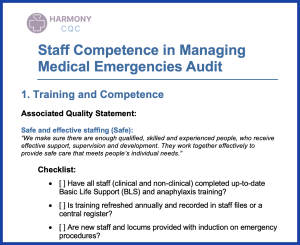
This week’s audit focuses on Staff Competence in Managing Medical Emergencies, in line with the following CQC regulations:
- Regulation 12: Safe care and treatment
- Regulation 17: Good governance
- Regulation 18: Staffing
And the following CQC “We” statements:
- Safe and effective staffing (Safe)
- Learning culture (Safe)
- Governance, management and sustainability (Well-led)
The audit helps practices ensure that every team member is trained, equipped, and confident to respond appropriately to emergencies, with strong leadership oversight and learning processes in place.
Why It Matters
- Patient safety: Immediate, confident responses save lives and prevent harm.
- Team confidence: Regular training and drills build trust and coordination under pressure.
- Legal and regulatory compliance: The CQC expects practices to evidence preparedness for medical emergencies at all times.
- Continuous learning: Reviewing drills and real incidents ensures systems evolve and improve.
What Good Practice Looks Like
- All staff — clinical and non-clinical — receive annual Basic Life Support (BLS) and anaphylaxis training.
- Emergency drills are carried out at least annually, with learning shared across the team.
- Emergency equipment (oxygen, AED, drugs) is accessible, checked, and in working order.
- Roles and responsibilities in emergencies are clear, rehearsed, and documented.
- Governance oversight ensures training compliance, incident review, and continual improvement.
Final Thoughts
Emergency readiness is not just about compliance — it’s about saving lives and protecting patients and staff when the unexpected happens.
By completing this audit, practices can:
- Confirm that training, equipment, and procedures are all up to date.
- Strengthen team communication and coordination.
- Provide assurance that emergency response is embedded into the culture of safety.
A calm, confident, and prepared team saves lives. This audit helps ensure your practice is ready — every day, for every patient.
Click the link below to join our Inner Circle today for just £1 for your first month and unlock full access to every CQC audit — your essential toolkit to feel fully prepared and inspection ready! 👇