https://club.hcqc.co.uk/c/self-audits/edit-lesson/sections/517639/lessons/2670479
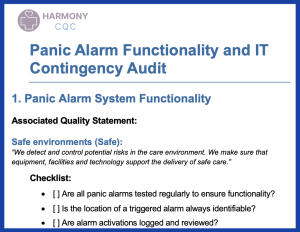
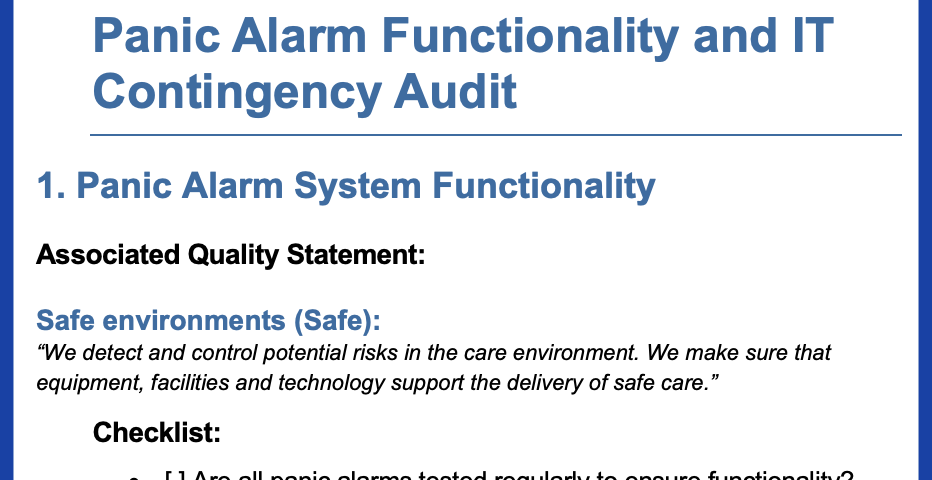
This week’s audit has been created in direct response to a critical incident reported in Bradford District and Craven. In that case, a panic alarm was triggered during an IT outage — but because the practice was in contingency mode, the system could not identify where the alarm had originated. In a large building, this left staff unable to respond effectively, highlighting a major gap in both safety and IT resilience.
Although no harm was reported, the event underlines the urgent need for practices everywhere to review their panic alarm functionality, IT dependency, and contingency arrangements. By turning a real-world incident into a structured audit, we can learn from others’ challenges and strengthen our own systems before they are tested in an emergency.
When a panic alarm is activated in a GP practice, every second counts. The expectation is simple: staff should know exactly where the alert has come from and how to respond quickly to protect colleagues and patients. But a recent critical incident in West Yorkshire showed how fragile this system can become when IT systems fail.
Why It Matters
In this case, a panic alarm was triggered during an IT outage. Because the practice was in contingency mode, the system could not identify where the alarm had originated. In a large building, this created confusion and delay — no one knew who had pressed the alarm or where to send help.
While it is not clear if anyone came to harm, the event highlights the risk of over-reliance on IT-linked safety systems. Panic alarms are designed to be a last line of defence in emergencies such as aggression, violence, or medical collapse. If they fail, staff safety and patient protection are compromised.
This issue is directly linked to CQC expectations, particularly under:
· Regulation 12 (Safe Care and Treatment) – ensuring that safety systems, including panic alarms, work reliably at all times.
· Regulation 17 (Good Governance) – ensuring governance processes identify, review, and mitigate risks, including IT contingency.
Building IT-Resilient Safety Systems
This audit is not just about testing panic buttons once a month. It’s about asking:
· Will this system work in an IT outage?
· Do staff know what to do if alarms fail?
· Does leadership have assurance that backup systems are robust?
For practices that use IT-linked panic alarms, it is essential to have contingency arrangements — whether physical alarm buttons, radios, or a clear protocol for summoning help. Staff need to know how to switch from digital to manual processes without hesitation.
✅ Final Thoughts
The Bradford incident reminds us that patient and staff safety cannot depend on IT alone. Resilient systems combine reliable technology with clear contingency planning, regular testing, and confident staff responses.
By embedding panic alarm checks and IT contingency planning into audits, practices can:
· Provide assurance to staff that they will be protected in emergencies.
· Demonstrate compliance with CQC regulations.
· Build resilience against future IT outages or system failures.
It’s about more than ticking a box. It’s about ensuring that when the alarm is raised, everyone knows where to go, what to do, and how to keep people safe.
Click the link below to join our Inner Circle today for just £1 for your first month and unlock full access to every CQC audit — your essential toolkit to feel fully prepared and inspection ready! 👇