https://club.hcqc.co.uk/c/self-audits/edit-lesson/sections/517639/lessons/2409184
In the fast-paced world of general practice, it’s inevitable that mistakes, near misses, and complex clinical events will occasionally occur. But what truly defines a safe, well-led, and continuously improving practice is how those events are handled — not whether they happen in the first place.
That’s where Significant Event Analysis (SEA) comes in.
SEA Is About Learning, Not Blame
SEA is a structured way to investigate and learn from events that had the potential to impact patient care, safety, or staff wellbeing. Whether the outcome was positive or negative, the focus is always the same: What can we learn, and how can we do better?
This process gives practices the opportunity to review what happened, understand why, and — crucially — make meaningful changes that reduce risk and improve outcomes in the future.
✅ Why the CQC Cares About SEA
Under the CQC’s Assessment Framework, your practice is expected to demonstrate a “learning culture” and robust governance systems. That includes:
- Logging significant events promptly
- Involving the team in reflective discussions
- Turning lessons into action plans
- Reviewing and monitoring those changes over time
These processes are closely tied to the following CQC ‘We’ statements:
- Learning culture (Safe): We learn from safety concerns and embed improvements
- Governance, management and sustainability (Well-led): We manage risk through accountable systems
- Freedom to speak up (Well-led): We foster a culture where staff feel safe to raise concerns
The audit helps you demonstrate how your practice meets these expectations in a clear and structured way.
📋 What This Audit Helps You Do
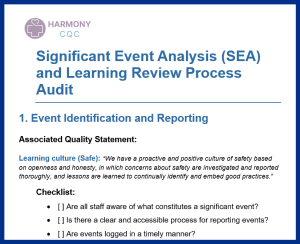
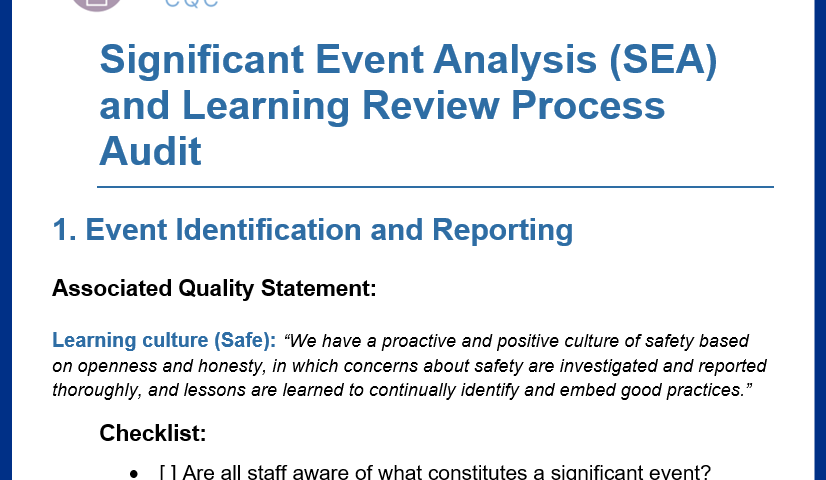
This week’s SEA audit will help you explore four key areas:
- Event Identification and Reporting – Do staff understand what counts as a significant event? Are events logged clearly and promptly?
- Investigation and Documentation – Are SEAs detailed, timely, and reviewed by the right people?
- Learning and Improvement – Are lessons shared across the team, and is there a clear plan to embed changes?
- Culture and Communication – Is the process open, supportive, and psychologically safe for your team?
By asking both checklist and reflective questions, the audit moves you from assuming everything is working to knowing that it is — with evidence to back it up.
In Summary
Significant Event Analysis isn’t just about compliance — it’s about cultivating a team that feels safe to speak up, learns from its experiences, and continuously improves how it delivers care.
This audit will help you:
- Strengthen your approach to SEA
- Demonstrate CQC readiness
- Foster a learning culture across your team
Use it to start a conversation — not just a checklist. That’s where real improvement happens.