https://club.hcqc.co.uk/c/self-audits/edit-lesson/sections/517639/lessons/2272871
Consent is one of the most fundamental principles in healthcare — it ensures that patients have autonomy, understanding, and control over the care and treatment they receive. In general practice, where care often extends across procedures, communication, and data sharing, consent must be routinely considered, clearly documented, and regularly reviewed.
This week’s audit focuses on how well your practice is managing consent for treatment, information sharing, and communication preferences, supporting both legal obligations and CQC compliance under the Single Assessment Framework.
✅ What Does the CQC Expect?
The Care Quality Commission (CQC) has embedded consent within its 34 Quality Statements, requiring practices to demonstrate good governance and person-centred care through specific ‘We’ statements, including:
- 🔹 Consent to Care and Treatment (Effective domain)
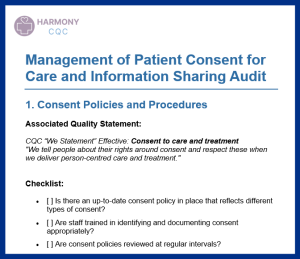
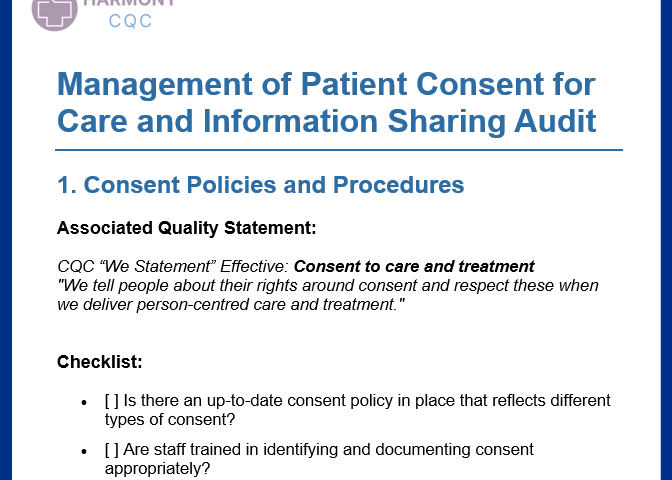
“We tell people about their rights around consent and respect these when we deliver person-centred care and treatment.” - 🔹 Governance, Management and Sustainability (Well-Led domain)
“We have clear responsibilities, roles, systems of accountability and good governance.” - 🔹 Person-Centred Care (Responsive domain)
“We make sure people are at the centre of their care and treatment choices and we decide, in partnership with them, how to respond to any relevant changes in their needs.”
This audit helps you check your practice’s systems for consent are not just in place — but working as intended.
🔍 Where Consent Applies in General Practice
Consent plays a role in multiple everyday activities across the practice, including:
- Clinical procedures – smears, injections, minor surgery
- Mental capacity and best interest decisions – particularly with vulnerable adults
- Information sharing – Summary Care Records, local shared care agreements, and third-party requests
- Communication methods – SMS, email, and voicemail preferences
- Proxy or LPA involvement – where formal or informal representatives are involved in care decisions
With so many touchpoints, systems must be robust, and staff must be clear on how and when to obtain and document consent appropriately.
⚖️ It’s a Legal and Ethical Duty
Under the Mental Capacity Act 2005, Data Protection Act 2018 (UK GDPR), and NHS Constitution, practices are required to:
- Ensure patients understand what they are consenting to
- Provide information in a way patients can process
- Record and honour decisions about care, data sharing, and preferences
- Support those with fluctuating or limited capacity
- Respect the right to decline or withdraw consent
This audit helps identify whether your practice is doing this consistently — and whether any systems, documentation, or staff training need review.
👥 Why It’s Also About Patient Experience
Consent isn’t just a legal formality — it’s a demonstration of respect and inclusion. It shows that:
- Patients are in control of their care
- Communication is transparent and clear
- Staff understand the importance of autonomy and dignity
- Information is only shared when patients are comfortable and aware
From vulnerable adults to digitally cautious patients, managing consent properly builds trust and ensures no one is excluded from informed care.
🧠 What This Audit Helps You Explore
This audit allows you to assess:
- Whether your consent policies are current, clear, and understood
- How well consent for care and procedures is documented
- If information sharing decisions are captured and followed
- How you support mental capacity assessments and involve appropriate proxies
- Whether communication preferences are respected and recorded
✅ In Summary
Managing consent well is not just about documentation — it’s about doing the right thing for every patient, every time.
By completing this audit, your practice can:
- Identify where systems and processes need strengthening
- Reassure your team and patients that their rights are being respected
- Meet key CQC quality statements in the Effective, Responsive, and Well-Led domains
- Reduce the risk of complaints, data breaches, or clinical misunderstandings
👉 Use this audit to ensure your approach to consent is clear, compliant, and consistently applied — for safer care and better outcomes.