https://club.hcqc.co.uk/c/self-audits/edit-lesson/sections/517639/lessons/2013637
📣 Now’s the Perfect Time to Refocus on Long-Term Conditions Care
With QOF 2024/25 wrapped up and new changes for 2025/26 now in effect, this is the perfect time to step back and review how your practice supports patients with long-term conditions.
You’ve already done the hard work – now’s the time to make sure your recall systems, care plans, and reviews are working efficiently and in line with the latest guidance.
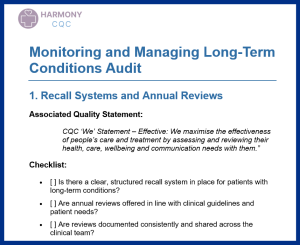
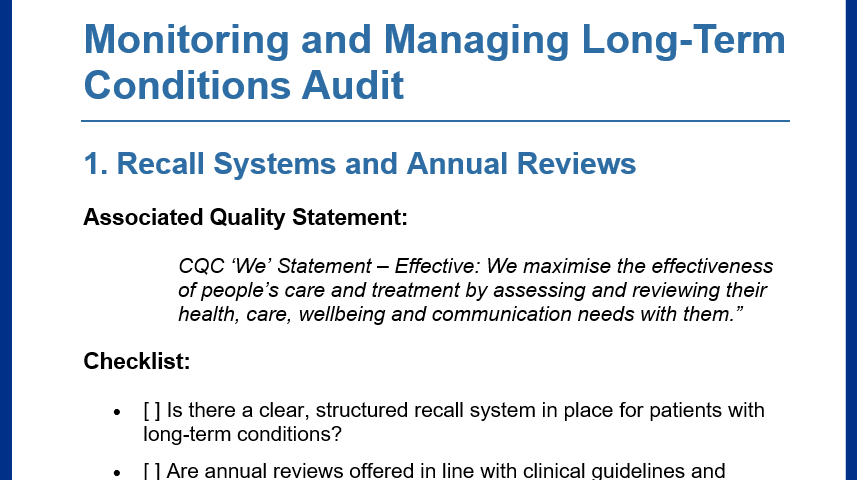
To help, we’ve created a Monitoring and Managing Long-Term Conditions Audit — a practical, CQC-aligned tool to assess what’s working well and where improvements can be made.
🩺Why Monitoring and Managing Long-Term Conditions Is Essential in General Practice
In general practice, the ongoing care of patients with long-term conditions (LTCs) such as asthma, diabetes, COPD, hypertension, and heart disease forms the backbone of day-to-day clinical work. These patients often need continuous monitoring, personalised support, and coordinated care to stay well and avoid deterioration.
This audit supports teams in reviewing how effectively and consistently they are managing LTCs — and aligns directly with several of the CQC’s ‘We’ statements under the new assessment framework, helping practices to demonstrate safe, person-centred and well-led care.
🧭 What Are Long-Term Conditions?
Long-term conditions are health issues that typically cannot be cured but can be managed to improve quality of life. Many patients live with multiple LTCs and require joined-up, proactive care involving the wider team.
Examples include:
- Diabetes
- Asthma
- Chronic kidney disease
- Atrial fibrillation
- Depression or anxiety
- COPD
- Hypertension
✅ Why This Audit Matters
1. Improves Patient Outcomes
Well-managed LTCs reduce the risk of complications, emergency admissions, and worsening health. Regular reviews, accurate coding, and timely interventions help patients remain in control of their condition.
2. Supports Personalised Care
The CQC expects practices to involve patients in their care planning and to tailor interventions to individual needs and preferences. This audit checks whether care plans are person-centred and whether patients are empowered to self-manage.
3. Ensures Consistency and Equity
A structured recall system ensures that no patient is missed, and that care is delivered consistently across the population, regardless of background or condition.
4. Prepares You for CQC Inspections
Each section of the audit is mapped to a specific CQC ‘We’ statement. This makes it easier to gather and present inspectable evidence for the care you’re already providing.
5. Strengthens Governance and QOF Performance
Monitoring coding, exception reporting and data accuracy ensures that:
- QOF data reflects the true picture of your care delivery
- Registers are up to date
- Staff feel confident in clinical searches and reporting
🔍 What the Audit Helps You Explore
- Is your recall system proactive, fair, and efficient?
- Are care plans meaningful and co-created with patients?
- Are you reviewing multiple conditions together to avoid duplication?
- Are coding and exception reporting accurate?
- Do patients have access to tools, resources and support to self-manage?
🚀 The Bigger Picture
Managing long-term conditions well isn’t just about ticking clinical boxes — it’s about helping patients live healthier, longer lives, and ensuring they feel listened to, supported, and involved.
By using this audit regularly, you can:
- Identify gaps or inequalities in care
- Celebrate what’s working well
- Shape action plans for improvement
- Align clinical work with CQC expectations and population health goals
📝 Ready to Take Action?
Use this week’s audit to reflect as a team on your LTC processes — from admin to clinical care — and agree clear next steps. It’s an opportunity to review, realign, and raise the bar for how you support patients living with long-term health conditions.