https://club.hcqc.co.uk/c/self-audits/edit-lesson/sections/426166/lessons/1596175
Fire safety is a critical responsibility for every general practice. The risk of fire is often underestimated in healthcare settings, yet the consequences of poor fire safety management can be devastating, endangering patients, staff, and the continuity of care.
This article explores why fire safety is essential, how it aligns with CQC compliance, and how practices can use the Fire Safety Audit to ensure they meet their responsibilities.
Why Fire Safety Matters in General Practice
1. Protecting Patients, Staff, and Visitors
Healthcare environments have vulnerable patients, some of whom may have limited mobility or cognitive impairments, making safe evacuation challenging in an emergency. Staff also need to be confident that they can respond quickly and effectively in the event of a fire.
Key risks include:
🔥 Electrical fires from medical equipment or overloaded sockets.
🔥 Flammable materials such as paper records, oxygen cylinders, or cleaning chemicals.
🔥 Blocked escape routes or poor staff awareness of fire evacuation procedures.
By having robust fire safety policies, training and clear evacuation plans, general practices can reduce these risks and protect everyone on site.
2. Legal and Regulatory Requirements
Fire safety is not optional, it is a legal requirement.
Regulatory Fire Safety Obligations:
The Regulatory Reform (Fire Safety) Order 2005 places a duty on general practices to assess fire risks and put appropriate control measures in place.
The Health and Safety at Work Act 1974 requires safe working conditions for employees, which includes fire risk management.
CQC and Fire Safety:
The Care Quality Commission (CQC) expects practices to have evidence of fire risk assessments, training and clear emergency procedures. Failure to meet fire safety standards could lead to enforcement action or even practice closure.
3. Business Continuity: Protecting the Future of Your Practice
A fire in a GP practice can be catastrophic, leading to:
- Loss of critical patient records (even in the age of digital systems).
- Temporary or permanent closure of the premises.
- Severe reputational damage, impacting patient confidence.
By regularly reviewing fire safety measures, practices ensure they are not only compliant but also resilient in the face of potential disasters.
Common Fire Safety Risks in General Practice
- Equipment & Electrical Hazards: Overloaded sockets, faulty wiring, medical equipment overheating.
- Flammable Materials: Storage of paper files, cleaning products, oxygen cylinders.
- Blocked Escape Routes: Cluttered hallways, obstructed fire exits.
- Lack of Fire Drills & Training: Staff not knowing evacuation procedures, confusion in an emergency.
- Inadequate Fire Risk Assessments: Failure to identify hazards, outdated risk logs.
Many of these risks can be easily mitigated with regular fire safety audits and training.
How the Fire Safety Audit Helps Your Practice
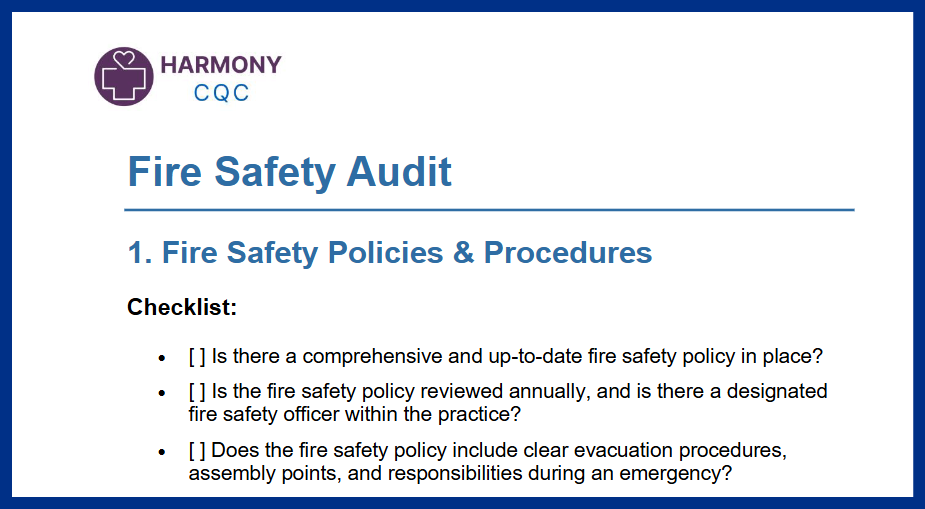
The Fire Safety Audit is designed to help GP practices assess whether they have the necessary preventative measures, policies and training in place. By working through the audit, you can:
✅ Identify gaps in fire safety management.
✅ Ensure compliance with fire safety regulations and CQC expectations.
✅ Confirm staff know evacuation procedures and fire response protocols.
✅ Strengthen business continuity plans in case of an emergency.
✅ Foster a safety-first culture in your practice.
Key Areas Covered in the Fire Safety Audit
The audit assesses essential fire safety elements, including:
- Fire Risk Assessments: Are they regularly updated?
- Fire Equipment & Maintenance: Are extinguishers, alarms and emergency lighting checked?
- Staff Training & Fire Drills: Do all team members know what to do in an emergency?
- Evacuation Plans & Signage: Are exits clearly marked and routes unobstructed?
- Storage & Fire Prevention Measures: Are flammable materials managed safely?
By completing this audit, you not only ensure compliance but also protect your staff, patients, and practice from potential harm.
Embedding Fire Safety Into Everyday Practice
Fire safety isn’t just about an annual check, it needs to be a continuous priority. Here’s how practices can integrate fire safety into daily operations:
🔥 Regular Fire Drills: Ensure all staff know how to respond in an emergency.
🔥 Fire Warden Responsibilities: Assign fire wardens and review their duties regularly.
🔥 Up-to-Date Risk Assessments: Update fire risk logs at least annually or after any significant change.
🔥 Clear Escape Routes: Conduct monthly checks to keep exits clear.
🔥 Annual Fire Safety Training: Keep all staff confident in fire prevention and emergency response.
A strong fire safety culture means reducing risk before a fire ever occurs – protecting your patients, your team, and your practice’s future.
Final Thoughts: Fire Safety is Everyone’s Responsibility
Fire safety in general practice isn’t just about meeting compliance requirements, it’s about protecting lives, safeguarding business continuity, and fostering a risk-aware culture.
Next Step: Complete the Fire Safety Audit today and take proactive steps to protect your practice.