
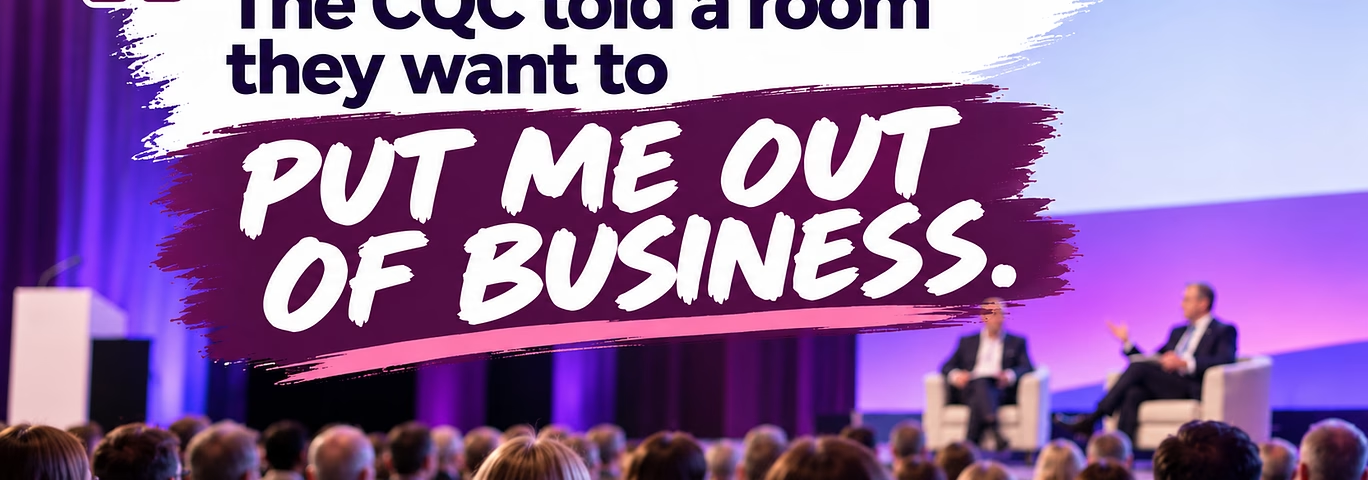
I was standing at the back of the Neighbourhood Theatre when it happened.
Dan Bunstone was chairing. On the stage next to him was Paul, the CQC’s director of primary and community services. Paul looked out at the room and said, in words very close to these: “We want to put you out of business. We want to make our guidance so clear and so transparent that practices won’t need people like you to deliver their CQC evidence.”
He was looking at me when he said it.
I’ll be honest. You don’t expect that from a regulator. In my experience, nobody representing the CQC has ever said anything with that kind of spark in their eye. Afterwards we had a proper chat and a laugh about it, and it turned into a bit of a joke between us.
But I’ve thought about it since, because it’s the right ambition. If the CQC makes its guidance clear enough that practices can follow it without help, that’s a better system for every practice in the country. I’d welcome it.
Here’s where I land, though. Clear guidance tells you what an inspector will look for. It doesn’t build the system in your practice that produces the evidence week after week. Someone in your team still has to own it, and it still has to run when the practice manager is on leave.
That part has never been about the guidance. It’s about whether the work your team already does is captured, checked and visible, so you can show it when someone asks.
So if the CQC does put me out of business, I’ll be pleased. Until then, my job is to help practices build something that doesn’t depend on me either.
Join the free Harmony CQC community to see how other practices are doing it. If you want a system built properly, start with The Simple Path.