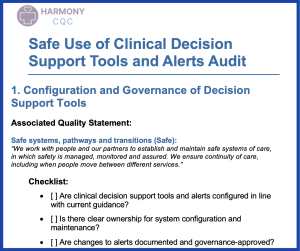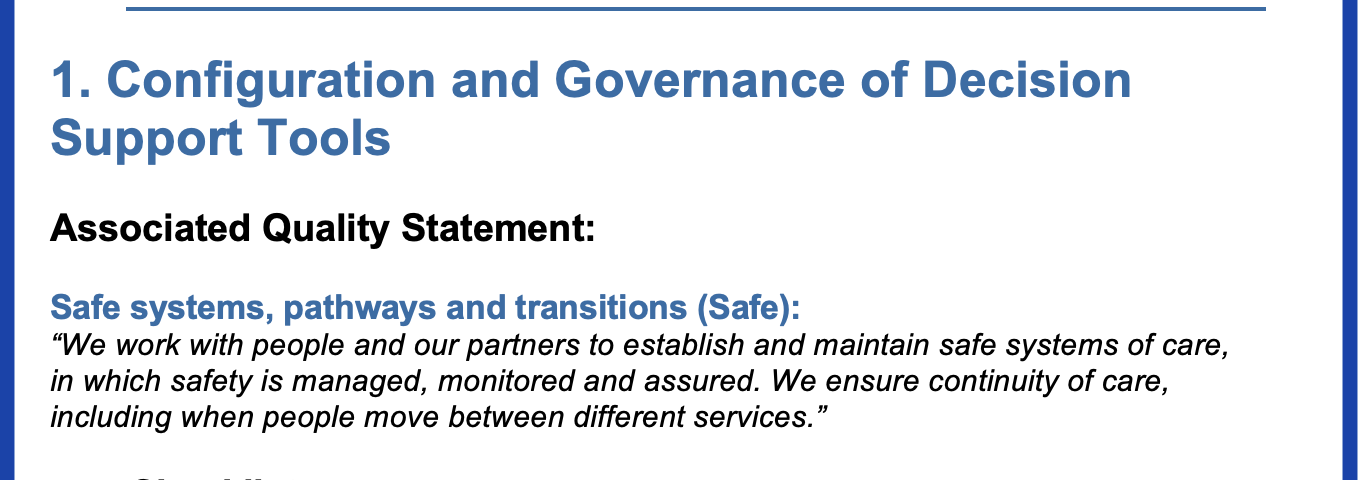
Audit download: Safe Use of Clinical Decision Support Tools and Alerts Audit
Clinical decision support tools and alerts are now embedded in everyday general practice. From prescribing prompts and drug interaction warnings to monitoring reminders and safeguarding alerts, digital systems play a major role in shaping clinical decisions.
When these tools work well, they support safe, consistent, evidence-based care. When they are poorly configured or overwhelming, they can increase risk, contribute to alert fatigue, and lead to critical information being missed.
Why This Audit Was Created
This audit focuses on the Safe Use of Clinical Decision Support Tools and Alerts, aligning with the following CQC “We” statements:
- Safe systems, pathways and transitions (Safe)
- Delivering evidence-based care and treatment (Effective)
- Learning culture (Safe)
CQC increasingly expects practices to demonstrate that digital systems are actively governed, reviewed, and improved – not simply accepted as “how the system works”.
Why This Matters in General Practice
Digital tools can introduce hidden risk
Alerts are designed to protect patients, but too many prompts, poorly prioritised warnings, or outdated rules can lead to alert fatigue. When staff routinely override or ignore alerts, even high-risk warnings can be missed.
System design influences human behaviour
Modern inspections recognise that errors often arise from how systems are designed, not from individual failings. Practices are expected to show how they manage digital risk, usability, and safety as part of their governance.
Supporting safe clinical judgement
Decision support tools should enhance professional judgement, not replace it. Clinicians must understand which alerts require action and how to involve patients when prompts suggest changes to treatment or monitoring.
Learning from incidents and near misses
Missed or overridden alerts frequently feature in significant events. CQC looks for evidence that practices review these incidents through a learning culture, using them to improve systems rather than assign blame.
What Good Practice Looks Like
- Clear ownership of clinical system configuration
- Regular review of alerts and prompts for relevance and priority
- Processes to identify and address alert fatigue
- Staff confidence to raise concerns about unsafe digital workflows
- Learning from incidents leading to system improvements
Final Thoughts
Digital systems are now a core part of patient safety. Managing them well is as important as managing medicines, staffing, or premises.
By completing the Safe Use of Clinical Decision Support Tools and Alerts Audit, practices can demonstrate that they:
- Actively manage digital safety risks
- Support clinicians to deliver evidence-based care
- Embed learning and continuous improvement
- Meet CQC expectations with confidence
Ultimately, this audit shows that technology in the practice is working for patients and staff – not against them.
Click the link below to join our Inner Circle today for just £1 for your first month and unlock full access to every CQC audit — your essential toolkit to feel fully prepared and inspection ready! 👇