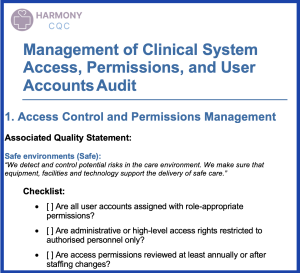
Audit: Management of Clinical System Access, Permissions, and User Accounts Audit
In today’s digital-first NHS, the safety of care isn’t just about the clinical environment, it’s also about how securely your digital systems are managed.
Every member of the practice team relies on access to clinical and administrative systems such as EMIS, SystmOne, Docman, AccuRx, and NHS Mail.
But when those systems aren’t properly controlled, for example, if accounts aren’t deactivated when someone leaves, or permissions are too broad, the risks are significant.
This isn’t just about cybersecurity; it’s about patient safety, data integrity, and governance accountability.
🔍 Why This Audit Was Created
This week’s audit focuses on Clinical System Access, Permissions, and User Accounts, aligning with:
- Regulation 12: Safe care and treatment
- Regulation 17: Good governance
- Regulation 18: Staffing
- Regulation 19: Fit and proper persons employed
And the following CQC “We” statements:
- Safe environments (Safe)
- Governance, management and sustainability (Well-led)
- Learning, improvement and innovation (Well-led)
- How staff and teams work together (Effective)
The goal is to ensure your practice can evidence that system access is secure, proportionate, and well-managed and that every user’s access reflects their current role and responsibilities.
Why It Matters
1️⃣ Patient confidentiality and data protection
Every login represents a potential access point to sensitive patient data.
When permissions are too broad or inactive accounts remain open, the practice’s legal and ethical obligations under GDPR and CQC Regulation 12 are at risk.
2️⃣ Governance accountability
CQC inspectors expect practices to demonstrate digital governance, meaning they can evidence who has access to what, how that access is monitored, and how it is revoked.
3️⃣ Workforce change and role flexibility
With staff turnover, shared roles, and cross-site working, access management can easily become fragmented.
A clear audit trail ensures accountability even when multiple people work across different systems.
4️⃣ Building a culture of digital safety
Staff training and awareness around permissions, passwords, and data security form part of the wider safety culture, just like infection control or medicines safety.
What Good Practice Looks Like
- Every staff member has a named account, never a shared login.
- Permissions are reviewed regularly, at least quarterly or after staffing changes.
- Accounts are deactivated promptly when staff leave or move roles.
- System audit logs are checked for irregular access or activity.
- All staff receive annual data protection training and refreshers on confidentiality and system use.
✅ Final Thoughts
Managing system access might seem like a technical task, but it’s actually a core part of clinical safety and good governance.
When access is well controlled, practices can demonstrate to CQC that they know exactly who can see, edit, and act on patient information and that robust oversight protects both patients and staff.
Embedding this audit helps your practice show that:
- Access is safe and compliant,
- Governance systems are proactive, not reactive, and
- Digital safety is treated with the same seriousness as physical and clinical safety.
Click the link below to join our Inner Circle today for just £1 for your first month and unlock full access to every CQC audit — your essential toolkit to feel fully prepared and inspection ready! 👇