https://club.hcqc.co.uk/c/self-audits/edit-lesson/sections/517639/lessons/2756261
Remote consultations have become an integral part of general practice, offering flexibility and improved access for many patients. Telephone, video, and online consultations can reduce barriers to care, save time, and provide convenience. However, they also carry specific risks: missed red flags, digital exclusion, and patient concerns about empathy or confidentiality.
Why This Audit Was Created
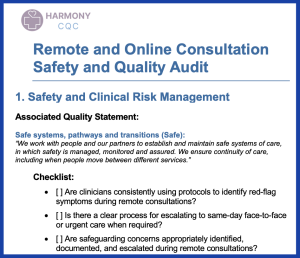
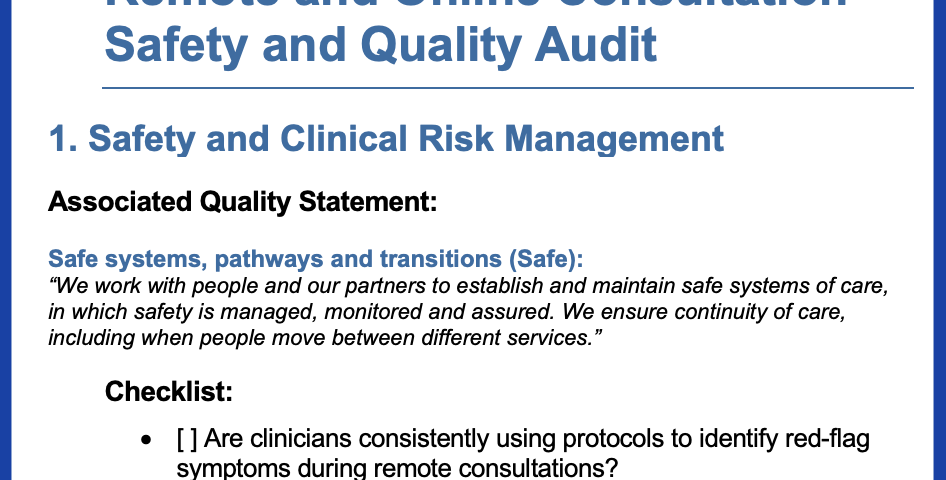
This week’s audit focuses on the safety and quality of remote and online consultations, in line with CQC expectations under:
- Responding to people’s immediate needs (Caring)
- Person-centred care (Responsive)
- Delivering evidence-based care and treatment (Effective)
- Safe systems, pathways and transitions (Safe)
The audit helps practices evaluate whether remote consultations are delivered safely, whether patients feel listened to, and whether services remain inclusive for all groups.
Why It Matters
- Clinical safety: Red-flag symptoms can be harder to detect without physical examination. A robust escalation process is essential.
- Equity of access: Not all patients have the same access to technology, confidence in digital tools, or language skills for online platforms.
- Patient experience: Patients expect the same level of respect, compassion, and communication remotely as they do face-to-face.
- Governance: Documentation, learning from incidents, and regular review of remote consultations are essential for continuous improvement.
What Good Practice Looks Like
- Clinicians use clear protocols to identify when a remote consultation is safe, and when escalation to face-to-face care is required.
- Patients are offered choice of consultation method, based on preference and clinical need.
- Digital services are designed with accessibility in mind, offering alternatives for patients at risk of exclusion.
- Consultations are fully documented, with learning from significant events and patient feedback fed back into governance.
- Staff are supported with training and resources to adapt their communication skills for remote interactions.
Final Thoughts
Remote consultations are here to stay, but safety, accessibility, and patient-centredness must remain the priority. By embedding this audit, practices can provide assurance that:
- Patients are safe and supported, regardless of consultation method.
- Digital services are inclusive and equitable.
- Systems are robust, documented, and continuously improving.
Ultimately, good remote consultation practice is not just about technology — it is about ensuring that every patient still feels heard, respected, and cared for, even when the consultation takes place at a distance.
Click the link below to join our Inner Circle today for just £1 for your first month and unlock full access to every CQC audit — your essential toolkit to feel fully prepared and inspection ready! 👇