
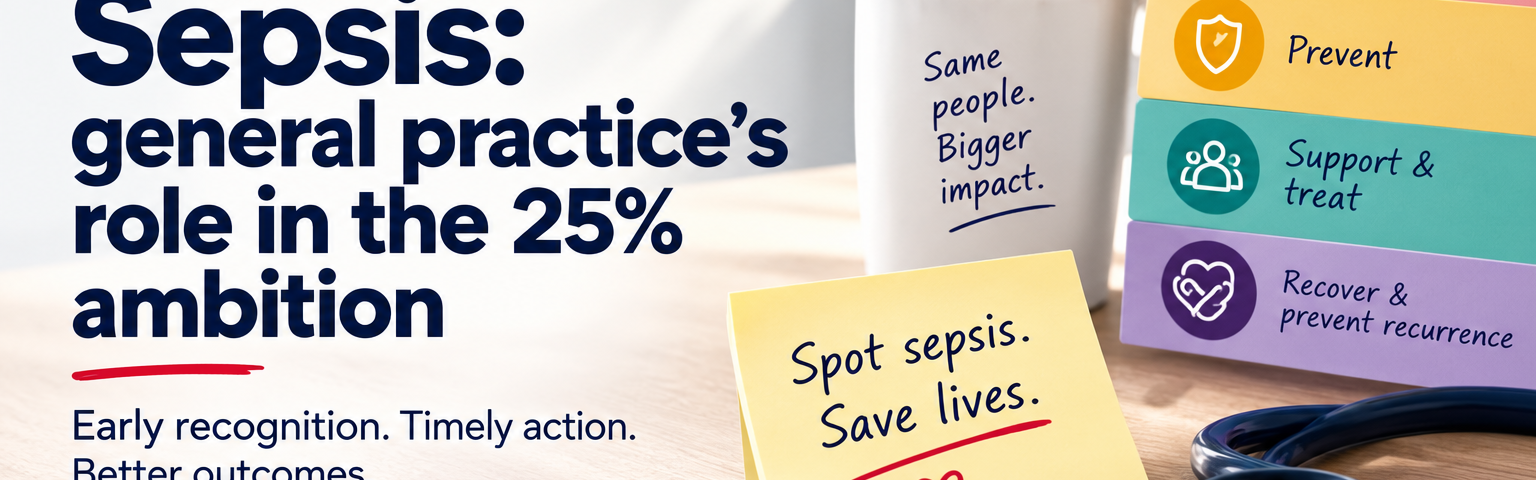
World Sepsis Day fell on 13 September, marking a call to action to prevent avoidable deaths and disabilities from sepsis. It remains a serious challenge for the NHS — over 118,000 emergency admissions were recorded in 2024/25.
The NHS Sepsis Modern Service Framework (MSF) sets out a comprehensive, pathway-wide approach to improving outcomes, and general practice sits right at the centre of it. The MSF’s ambition is to reduce sepsis deaths and complications by at least 25% by 2035, and primary care settings are named as central to achieving that.
The framework covers more than hospital-based treatment. It includes identification, prevention, community-based care and post-sepsis care delivered in the community — all areas where general practice already plays a role, whether that’s recognising red flag symptoms at a same-day appointment, supporting patients recovering after a sepsis admission, or picking up early signs in patients with underlying risk factors.
Worth doing now: read the Sepsis MSF and share it with your clinical team, check that sepsis red flags are built into your triage and same-day appointment processes, and make sure anyone supporting patients after a hospital admission knows what post-sepsis follow-up in the community should look like.